The Awkward Invoice: What Three Friend Commissions Taught Me About Paying Properly
There is a particular noise a friend makes when you ask them to make you something. It is half delight, half the sound of a mental calculator running out of battery. I heard it three times this year, and each time I panicked slightly. Was I about to turn a perfectly good friendship into a small business transaction with emotional stakes?
The phrase ‘friend rate’ floats around these moments like a warning buoy. It suggests that the kind thing to do is ask for a discount, or offer one, or somehow pretend money is not really the point. I have come to think that is backwards. The kind thing is to pay properly, and to make the asking and the paying as unembarrassing as possible.
So I ran a small experiment. I commissioned three UK makers I already knew — a potter, an illustrator and a bookbinder — for modest pieces. I kept the briefs short, the budgets honest and a note of every awkward sentence. This is not a guide from an expert buyer. It is a field report from someone who would rather eat a dry cracker than discuss deposits.
The rule I set myself
Before I emailed anyone, I wrote down three rules. First, I would ask for their normal rate rather than a friendship discount. Second, I would put the brief in writing, even if it was only five lines. Third, I would pay a deposit without being asked, because a deposit is not an insult; it is a way of saying ‘I understand this takes time’.
I also set a total budget of £300 for the three pieces. That is not a fortune, and it is not meant to be. The point was to see whether small commissions could still be done with clear terms. In a year when everyone I know is trying to support independent makers without pretending to have a gallery budget, that felt like the useful question.
Commission one: the potter
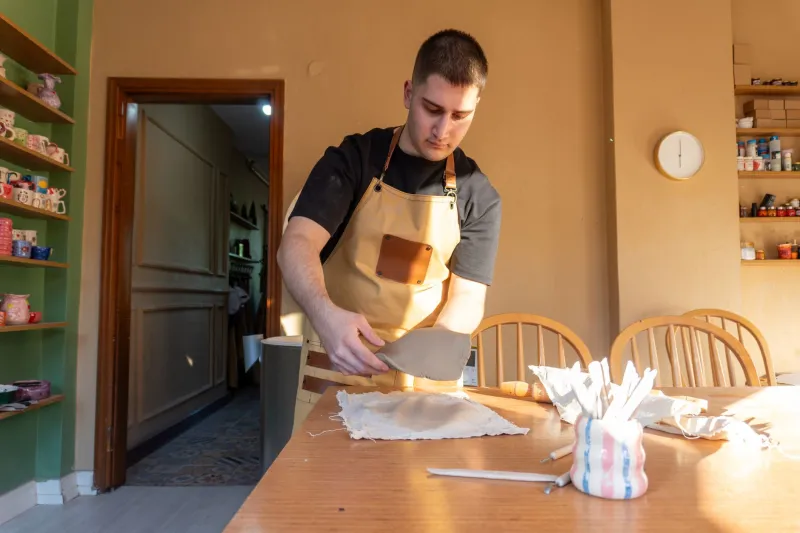
Nadia is a potter in Stoke-on-Trent. I asked her for a mug — 300 millilitres, a handle that fits two fingers, a glaze somewhere between oat and ditchwater. The budget was £65, including postage. She replied with a voice note that began ‘Ooh, I mean, I could do it for less…’ and I felt the familiar urge to say yes and make everything smaller and easier.
Instead I wrote back: ‘I’d rather pay your normal rate. If £65 works, brilliant. If it doesn’t, tell me what does.’
That sentence did more for our friendship than three years of saying ‘we must catch up’. She charged £65. The mug arrived with a note. I use it every morning. Nobody had to pretend it was a gift.
Commission two: the illustrator
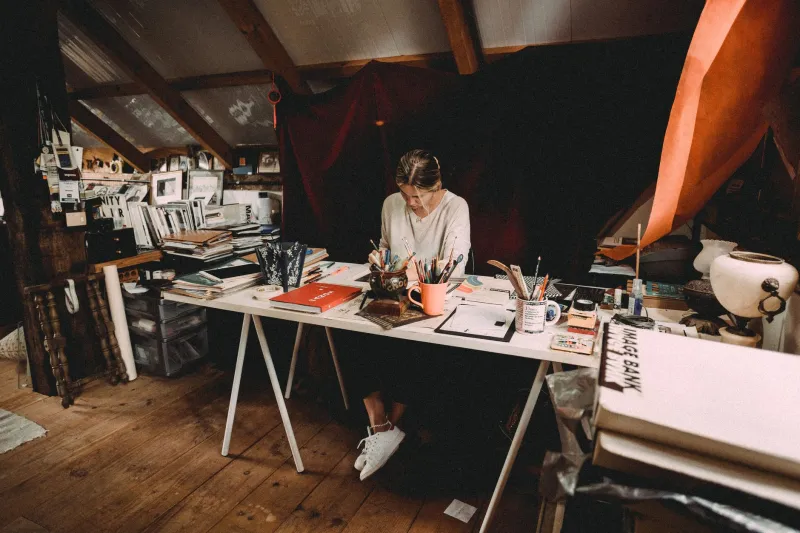
Priya is an illustrator in Leeds. I wanted an A4 print for the hallway: a small, slightly wonky street scene, not too sweet. Budget £120. This was the commission where I learned that ‘one small revision’ is a phrase that needs defining.
My first brief was a voice note after a glass of wine. Do not do this. My second brief was a proper email with three reference images and a sentence about colour. Better. When the first draft arrived, I had two notes. I sent them with the script I now keep in a notes app: ‘I’ve got two small notes, both about the same corner of the image. Could we try one version with these changes and then call it done? If that pushes past the budget, tell me before you start.’
She didn’t push past the budget. She did deliver a week later than we’d said. I replied: ‘No panic — I just need it by the 14th for the wall. Can you confirm that’s doable?’ It was. The print is now the first thing guests comment on, usually before they’ve taken their coats off.
Commission three: the bookbinder
Tom is a bookbinder in Bristol. I asked for a notebook: A5, lay-flat, grey bookcloth, nothing fancy. Budget £90. This was the one where I nearly sabotaged everything by being vague about materials. ‘Just something nice’ is not a brief. It is a wish.
He asked three practical questions: paper weight, ribbon or no ribbon, and whether I wanted a pocket. I answered all three. Then I asked the question I had been dreading: ‘My ceiling is £90 including postage. Is that workable, or should I wait until next year?’
He said it was workable if we skipped the ribbon. I said skip the ribbon. The notebook is plain and excellent. The friendship is also plain and excellent, which is the best review I can give.
The awkward bits, and the scripts that helped
Money conversations with friends do not become easy; they become clearer. Here are the lines I used, and the ones I wish I had used earlier.
‘What’s your normal rate for something like this?’ This is better than ‘What would you charge me?’ because it makes room for a real answer.
‘I’d rather pay properly than have you absorb the friendship discount.’ Say it once. Do not make a speech about it.
‘Would a deposit help?’ Ask before they have to ask you.
‘I’ve got two notes. Can we do one round of changes and then stop?’ Revisions need edges, not vibes.
‘I need it by the 14th. If that’s not realistic, say so now and I’ll adjust.’ Deadlines are kinder when they are stated plainly.
What I would do differently
Next time I would send the brief as a document, not a voice note. I would agree the revision limit before work starts, not halfway through. I would pay the deposit on the same day I send the brief, because good intentions have a way of drifting into next week.
And I would stop calling it a ‘friend rate’. The phrase makes generosity sound like a discount code. What I actually want is a friend rate in the old-fashioned sense: a rate that respects the friend. That means money on time, clear notes and no sulking about deadlines.
The invoice, it turns out, is not the end of the friendship. It is often the thing that lets the friendship breathe. I have three good objects in my house now, and three friends who know exactly where they stand with me. That feels like a bargain at any price.