The Envelope Test: Six Weeks of Trusting Strangers With My Small Prints
On a damp Tuesday in October, my postman handed me a stack of padded envelopes and said, “You’re keeping the envelope industry going.” I laughed, because he was not wrong. For six weeks I had been posting small linocut prints and folded zines to strangers who had seen a flyer in two local shops and sent me their address. Not a shop launch. Not a campaign. Just an experiment in what happens when you stop relying on a link and trust the post instead.
The flyer was plain: a slightly wobbly photo of a print on my kitchen table, a short note saying I had a box of small work to share, and a request that anyone interested cover the postage. I expected maybe eight replies. Forty-one people got in touch. Some were neighbours. Some were from towns I had never visited. One was from a person who said they had never bought art before and were not sure if a zine counted. I decided that it did.
Why I bothered with envelopes in 2026
Everything about the digital-first version of this makes more sense on paper. An email costs nothing. A link is instant. I could have put the prints in an online shop, posted a photo, and watched the numbers. But I have been making work long enough to know that a download does not always create a relationship. A link can be opened and forgotten in the same breath. An envelope has to be opened. It sits on a hall floor. Someone has to decide what to do with it.
That felt worth testing. Not because physical mail is nobler than the internet — it is slower, more expensive, and considerably more admin — but because it changes the tone. A DM arrives in a feed. A print arrives with a handwritten address on the front. The difference is not magic. It is just friction, and sometimes friction makes people pay attention.
The spreadsheet nobody asked for
I kept a spreadsheet because I am the sort of person who finds comfort in a column. The numbers were not glamorous. Padded envelopes came in a pack of twenty for £6.99. Rigid board backs, cut to size, worked out at roughly 15p each. Compostable sleeves were about 8p. Printer ink, tape, and the occasional emergency trip to the post office added a few more pounds. Postage was between £1.55 and £2.10 per parcel depending on weight and how late I was being. Across forty-one envelopes, the whole thing landed somewhere near £95, including replacements.
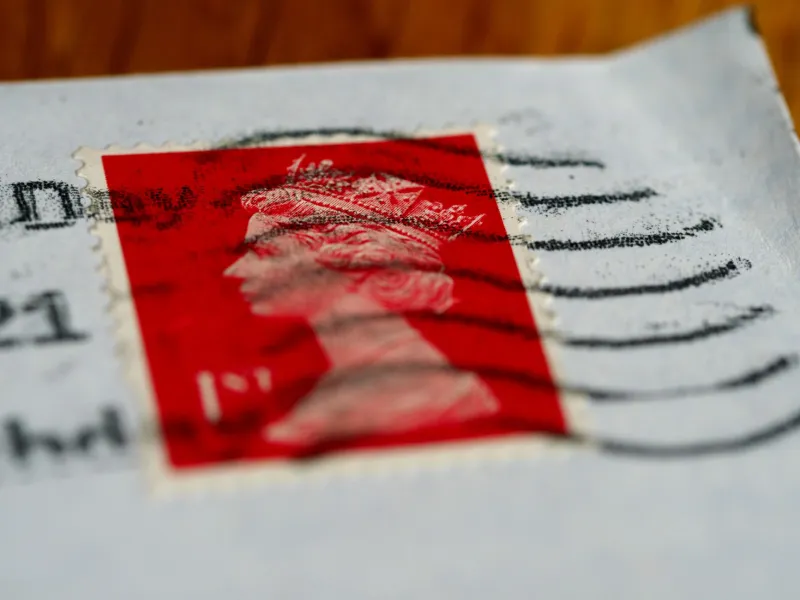
Some people sent the postage by bank transfer. A few put stamps in an envelope, which felt delightfully old-fashioned. One person sent a second-class stamp and a drawing of a cat. I am not saying that made the economics work. It did not. This was not a business model. It was a small, controlled way of finding out whether the work could survive the journey.
Bent corners and the small grief of returns
Three prints arrived bent. One parcel never arrived at all. The bent ones were my fault as much as anyone’s: I had trusted a single sheet of board and a “Please do not bend” sticker to do more than they could. Royal Mail sorting machines are not sentimental. The sticker is a request, not a force field.
The lost parcel was harder. I filled in the form, waited, and sent a replacement. The person on the other end was kind about it, which somehow made me feel worse. When you post work out, every envelope feels like a tiny gamble. You are not just sending a print. You are sending proof that you took someone’s address seriously and hoped they would like what came through the door. A bent corner feels personal in a way that a bad review does not.
I changed my packing after that: rigid board on both sides, a slightly larger envelope, and a note asking people to tell me if anything arrived damaged. It added cost and time. It also cut the breakages to zero for the final fortnight.
What strangers wrote back
The replies were the part I had not planned for. I had expected silence, or maybe a quick thank-you. Instead, people wrote properly. One woman in Aberdeen told me she had put her print next to the kettle because it was the only spot in the kitchen that got decent light. A man in Devon sent a photo of his zine propped open on a bus seat. Someone else wrote a two-page letter about the last time they had received something that was not a bill.
None of this was about me. That was the point. The prints were a prompt. The envelopes created a small, private exchange that had nothing to do with likes or reach. In a year when so much of my working life happens through screens, it was strange and rather moving to be reminded that an audience is not a number. It is a series of people with kettles and bus journeys and hall floors.
The cost of sending work out
The obvious cost is money. The less obvious cost is time: addressing, packing, queueing, replacing, and keeping track of who has had what. The least obvious cost is vulnerability. When you post work out, you do not get analytics. You do not know if it was opened, ignored, or put in a drawer. You just have to send it and wait.
I would not do this every month. It does not scale, and I am not sure it should. But as a periodic experiment, it changed how I think about sharing work. It made me treat my audience as individuals rather than a vague crowd. It also made me a better packer, which is not a sentence I expected to write in 2026.
What I would do differently next time
I would run it in shorter bursts — twenty envelopes rather than forty. I would use rigid board on both sides from the start. I would keep the handwritten addresses, because they seemed to matter, but I would give myself a proper evening to do them rather than rushing before the last collection. And I would say yes to fewer requests, so that each one still felt like a choice rather than a production line.
The postman still asks me if I have anything exciting. Some weeks I do. Some weeks I don’t. The experiment is over, but the habit has stayed: a small stack of envelopes by the door, a roll of tape, and the quiet belief that sending work out into the world one parcel at a time is still worth the price of a stamp.