Small Change, Wet Cardboard: A Month of Selling From My Front Wall
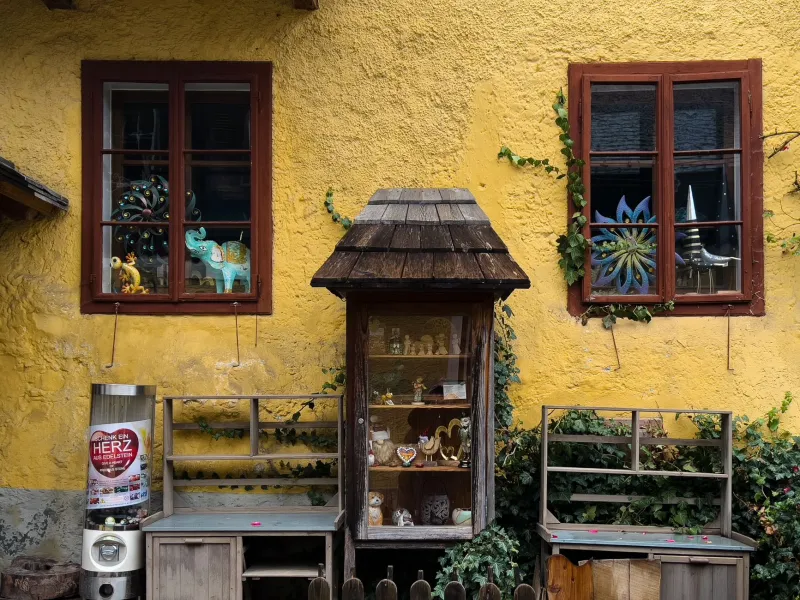
At the end of September I screwed a shelf to the wall beside my front door. It was not a shop. It was barely a stall. A scrap of plywood, a plastic cover, a laminated price list and a tin with a slot cut into the lid. I put out a few small prints, some badges, two lavender bags and a stack of notebooks I’d been tripping over since spring. Then I went back inside and pretended not to watch through the window.
The plan was simple: sell a little work without algorithms, notifications or a checkout page. I wanted to know what would happen if the only infrastructure was a shelf, a sign and the British weather. A month later, I have opinions about all three.
The setup: less shop, more bus stop
The shelf came from a salvage yard. The cover was a sheet of clear plastic held on with bulldog clips, which lasted exactly one windy Tuesday before I upgraded to a proper hinged lid. I added a chalkboard sign: ‘Honesty box. Cash only. Please don’t ring the bell — I’m probably upstairs.’
Stock was deliberately small. A handful of £3 badges, £4 notebooks, £6 prints and one £12 framed piece that I secretly hoped nobody would buy because I liked it. I kept a little pot of change inside the tin, though I later realised that was more optimistic than useful. Most people paid with coins or a note and didn’t want change anyway.
The first neighbour to stop was Margaret from next door. She read the sign, looked at the shelf, looked at me through the window, and mouthed, ‘Is this a charity thing?’ I shook my head. She bought a notebook and said, ‘Well, it’s nicer than another wheelie bin.’ I took that as permission.
What footfall actually looked like
Not much, and that was the point. On a good day maybe ten people paused. On a wet Wednesday, nobody. The school run brought a small bump, and Saturday morning was reliably the busiest hour of the week. Sunday evenings were dead. I sold twenty-six items across the month, which is not a business model but is enough to teach you things.
The surprise was the rhythm. People didn’t browse like shoppers. They stopped like neighbours. Some read every word on the price list. Some took photos of the shelf and walked on. One man bought the same card three times because, he said, his sister kept ‘borrowing’ it. A teenager left 50p and a note saying she’d come back for a badge — and she did, four days later, with the rest of the money.
Selling outside an algorithm felt strangely roomy. Nobody was nudging me to post more, bundle more or create urgency. The shelf was just there. If someone wanted something, they took it and paid. If they didn’t, the rain got on with its own agenda.
Pricing lessons I’d rather have learned cheaper
I started too cheap. A £2 badge felt friendly, but after materials and time it was basically a donation with extra steps. I moved them to £3.50 and sold about the same number. That was the first proper lesson: underpricing doesn’t necessarily make you more approachable; it just makes you tired.
The second lesson was about clarity. My first price list was a handwritten card with too many lines and a squashed arrow. People asked questions through the letterbox. I replaced it with a simple grid: item, price, ‘cash only’, ‘no change needed if you’re happy to round up’. Sales got easier immediately. Ambiguity is expensive.
I also learned that whole-pound prices are kinder to everyone when there’s no till. A £4 notebook is easy. A £4.50 notebook means someone is rummaging for a 50p while the rain picks up. I’m not saying every maker should round their prices, but for an honesty box, simplicity is a form of hospitality.
The weather is a business partner
The first storm took out my plastic cover and left three prints looking like they’d been through a wash cycle. Card curls. Ink runs. Paperbacks swell. I lost about £18 of stock in one night, which is not a disaster but is a very clear message from the sky.
After that, the shelf came in every evening. Everything lived in a lidded box. The price list moved inside a plastic sleeve, and I stopped pretending bulldog clips were engineering. I also learned to rotate stock away from the sun, because a month of weak autumn light is still enough to fade a print.
Weather forecasting became my stock system. If heavy rain was due, I put out fewer paper things and more badges. If wind was forecast, I weighted the shelf with a brick. If it was dry and bright, I brought out the good notebooks. It was ridiculous and oddly satisfying, like running a very small, very damp market stall.
Neighbours, trust and the tin
The tin was never robbed. That surprised me more than it should have. Once there was £5 too much. Once there was a note that said ‘sorry, I only had a tenner, back tomorrow with change’ — and the change arrived. A child left a drawing in the tin instead of money, which I’ve kept.
Not everyone understood it. One neighbour assumed it was for charity. Another asked if I was ‘doing something for the council’. A delivery driver told me I was brave, which felt like a lot for a shelf with three notebooks on it. But mostly people were kind. They liked that it was small. They liked that it wasn’t asking them to scan anything.
The tin also taught me that trust is not a grand statement. It’s a hundred tiny transactions. Someone sees a shelf, decides you’re not trying to fleece them, puts coins in a box and takes a badge. I trusted strangers not to clear the shelf; they trusted me not to sell them something rubbish. Both things held.
What I’d do differently next time
I’d start with fewer lines and better weatherproofing. I’d put the ‘cash only’ sign where people can see it before they fall in love with a print. I’d check the pavement rules with the council before, not after, a neighbour mentions it. I’d keep a weekly tally rather than checking the tin every five minutes like a nervous hen.
And I’d probably add a QR code for card payments, even though the whole point was to avoid the internet. Several people asked. I lost a few sales. There’s a difference between selling outside algorithms and pretending the rest of the world doesn’t use them.
Would I do it again? Yes. The shelf is still up, though it’s holding a soggy seed tray at the moment while I decide what winter stock looks like. I miss the small sound of coins going into the tin. I miss the notes. I even miss the weather being a legitimate part of the business plan.
If you’re thinking of trying an honesty-box shelf, start small, price clearly, bring things in at night and tell your neighbours before they tell you. And keep a spare brick. The rain will find you.