Silence With Witnesses: A Month of Drawing Beside the Returns Trolley
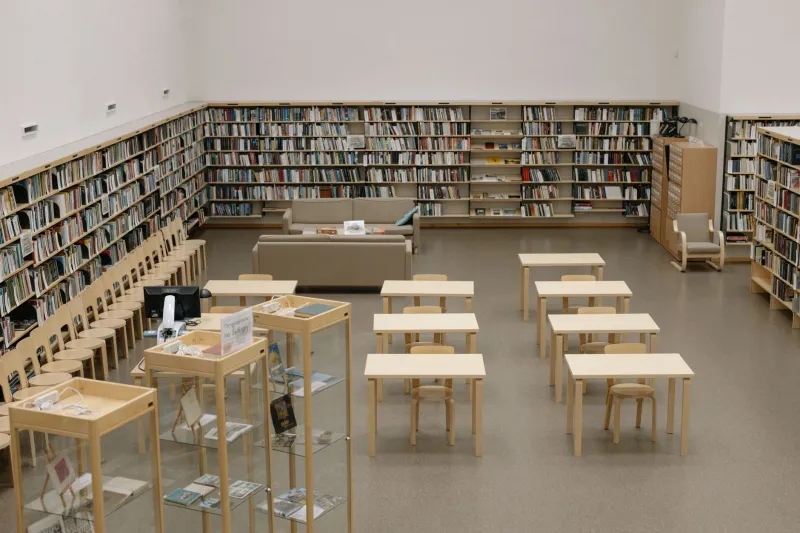
The first thing I learned about doing a residency in a library is that nobody calls it a residency. When I asked the branch manager if I could sit and draw for a few hours a week, she looked at me as if I’d asked to install a kiln. Then she said, “As long as you don’t mind the returns trolley.” That felt like a fair deal. By the end of October, I had spent four weeks making work between the returns trolley and the reference desk, and I had stopped thinking of it as a stunt. It was simply the quietest studio I’ve ever had.
Asking, Properly
I didn’t want to be the person who treats a public building like a co-working space with better heating. So I wrote a short email to the library manager: who I was, what I wanted to do, how long I’d stay, and what I’d bring. No wet media, no easels blocking aisles, no headphones so loud that I couldn’t hear a request to move. I offered to leave a small notice at the desk explaining why someone was drawing near the local history shelf. She said yes, but asked me to avoid the busiest hour after school pick-up. That was the whole negotiation. No contract, no fee, no branded lanyard. Just a polite ask and a willingness to be told no.
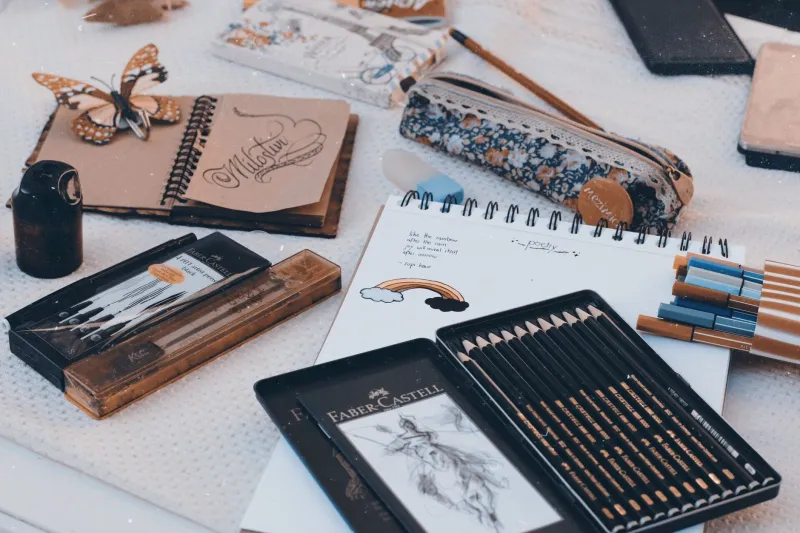
The practical cost was almost nothing. I used a library card I already had, a hardback sketchbook, two pencils, a putty rubber and a small folding board that fits in a tote bag. I bought nothing new. The library gave me a chair, a table, a view of the returns trolley and the low-level hum of a building doing several jobs at once. In a year when everyone keeps talking about creative space as something you rent by the day, it was a useful reminder that civic space still exists — not as a freebie, but as something shared.
The Awkwardness of Being Seen
Drawing in public is always a bit of a performance, even when you’re trying not to perform. In a café, people expect you to be there. In a library, you are slightly out of place. I became very aware of my pencil. The scratching sounded louder than it was. I worried that the person reading the newspaper two seats away thought I was sketching them. I worried that I was taking a table someone needed for a job application. I moved twice in the first week before I found a spot near the reference desk where I wasn’t in anyone’s way.
The awkwardness didn’t vanish, but it turned into something useful. I started drawing the things that belong to a shared room: the stack of returned paperbacks, the plastic date stamp, the noticeboard with its curling corners, the chair legs and the carpet tiles. I drew the returns trolley so many times that I began to see it as a small moving landscape. Nobody asked me to explain myself. A few people glanced. One man asked if I was doing a survey. A child asked if I was an artist, and when I said “sort of,” she looked disappointed, which felt fair.
What Public Silence Does to the Work
At home, I make work in the gaps between other things. I check my phone, put a wash on, answer a message. In the library, I sat for two hours at a time and did almost nothing else. That sounds precious, but it wasn’t. It was slightly boring, and boring was the point. The silence wasn’t empty; it was full of other people’s concentration. You could feel it in the room. Someone was revising, someone was printing a form, someone was reading a thriller with the spine cracked back. My small drawings had to hold their own in that atmosphere. They got simpler and more deliberate. I stopped trying to fill the page.
By the third week, I had a set of twelve pencil studies of the library interior — not a grand statement, just a record of a room in use. I showed them to the branch manager on the last day. She asked if I’d consider leaving a couple in the local history folder. I said yes. That felt like a better ending than a private view. The work went back into the building that made it.
Beyond the Free Wi-Fi
People talk about libraries as if their main offering is free internet and a warm place to sit. Both matter, especially now. But what I found in that month was less transactional. A library is one of the few indoor places where you can exist without being expected to buy something, hurry up, or explain why you’re there. That is a rare thing for a creative person, and rarer still for anyone on a tight budget. My “residency” cost me nothing but time and a bit of politeness. It gave me a deadline, a change of scene and an audience of people who were mostly minding their own business. That turned out to be exactly the right amount of attention.
Would I do it again? Yes, but I’d ask earlier, avoid the school rush, and bring a softer pencil. I’d also tell anyone thinking of trying it to speak to the staff first, keep your kit small, and don’t treat the quiet as a service. The library doesn’t owe you a studio. It offers you a seat in a shared room. If you can make something there without getting in the way, that’s a good month’s work.