The Swap Shop Sketchbook: Four Weeks of Drawing for Bread, Bikes and a Haircut
On a wet Tuesday in early October, I stood outside my local barber’s with a tenner and a vague sense that I needed a trim before a friend’s birthday. The tenner was for milk and a paper. The haircut was going to be sixteen quid. I’d just spent the last of my monthly fun budget on a new set of fineliners, and I was feeling that particular mix of guilt and stubbornness that often precedes a bad idea.
So I asked Dean, the barber, if he’d take a drawing instead.
He looked at me the way you look at a dog that’s brought a stick into the kitchen. Then he said, “What kind of drawing?”
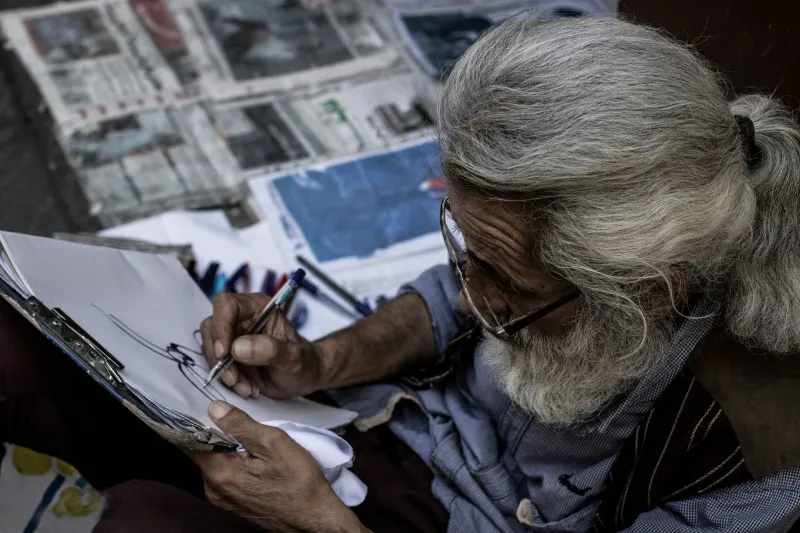
That was the start of four weeks of bartering. I called it the swap shop sketchbook. My rules were simple: no cash, no prints, only small original works — A5 ink or pencil, made specifically for the person I was trading with. I’d ask only at places I already used. And I’d write down every awkward pause, every no, and every surprising yes.
The rules, and the first ask
I made a list of six places on my road and the next one over: the barber, the bakery, the bike shop, the greengrocer, the charity shop, and the café that does the good flapjack. I gave myself a ceiling of two hours per drawing and a floor of one. I also decided that if someone said no, I’d say “no problem” and buy what I needed with actual money. That part turned out to be important.
The first ask was Dean. He’s been cutting my hair for three years. He knows I draw because I once gave him a card with a sketch of his shop on it. He said yes, but he didn’t want a portrait or a still life. He wanted a drawing of the alley behind the shop — the one with the wheelie bins and the fire escape. “It’s where I have my cigarette,” he said. “It’s the only bit of the day that’s mine.”
I drew the alley. It took two and a half hours. I got a decent haircut and a slightly uncomfortable feeling that I’d got the better end of the deal. A haircut is twenty minutes of someone’s time and a tenner’s worth of clippers. A drawing is hours of mine. But Dean framed it and put it by the mirror, and he told the next customer it was “a proper original”. So the value wasn’t really in the minutes. It was in the thing itself.
The sourdough negotiation
The bakery was harder. I asked the owner, a woman called Priya, if she’d swap a loaf for a drawing. She said yes immediately, then added, “But I want two drawings. One of the counter, one of the flour sacks. And I want to choose the paper.”
That felt like scope creep. I said one drawing, and I’d bring my own paper. She said, “Two small ones, then. And I’ll throw in a coffee.” We settled on two A6 ink sketches. I drew the flour sacks first — they were surprisingly lovely, all soft folds and dust. Then the counter, which was mostly a till and a card machine. Priya put the flour sack drawing up by the till and gave me a sourdough loaf and a flat white. I ate the bread for three days. It was very good bread.
What I noticed was that she didn’t treat it as charity. She treated it as a trade. She asked for what she wanted. That made it easier to say yes.
The bike repair that nearly fell apart
My back brake cable snapped on a Thursday. The bike shop on the high street is run by a bloke called Martin who has never once smiled at me. I asked if he’d fix it for a drawing. He said, “I can’t pay my suppliers in drawings.”
Fair enough. I offered to draw his shop sign — the hand-painted one above the door — so he could use it on his website. He looked at me for a long moment and said, “How long will that take you?” I said an hour. He said, “Fine. But I want the original, not a scan.”
Then he asked if I could also do a quick logo sketch for his invoices. I said no. That was the first time I’d said no to a trade, and it felt oddly good. The brake cable got fixed. I drew the sign. Martin grunted his thanks and gave me a spare inner tube “for the trouble”. I don’t think he liked me any more than before, but he did respect the boundary.
The surprising yeses
The greengrocer, a man called Eamon, asked for a drawing of his cat. The cat is called Biscuit and sleeps in a box of onions. I drew Biscuit in the box, and Eamon gave me a bag of apples, two pears, and a fistful of parsley. That was the best-value trade of the month.
The charity shop manager wanted a drawing of the window display for their Christmas appeal. I did it in forty minutes. She gave me an old wooden frame that had been in the back room for months. I took the frame home and put one of my own drawings in it. I felt like I’d cheated slightly, but she seemed delighted.
The café said no. They said they only trade in cash and card. I bought a flapjack and felt oddly relieved.
What the ledger of favours actually showed
By the end of four weeks, I’d made eleven drawings and traded nine of them. I’d had a haircut, a loaf of bread, a flat white, a bike repair, a bag of fruit, a wooden frame, and a bag of onions. I’d also spent about fourteen hours drawing.
On paper, that’s a terrible hourly rate. But that’s the wrong way to look at it. Barter isn’t a pricing strategy. It’s a relationship strategy. The people who said yes were people I already knew by sight. The trades made me visible on my street in a way that a website never could. Dean now points me out to customers. Priya waves at me through the window. Martin nods. That’s worth something, even if you can’t put it in a spreadsheet.
But there are limits. I can’t pay my council tax in drawings. I can’t buy a train ticket with a sketch of a train. Barter works at the edges of the economy — the small, local, human bits. It’s not a replacement for cash. It’s a supplement. And it only works if both sides are honest about what they’re getting.
Would I do it again?
Yes, but not all the time. The awkwardness of asking is real. It feels like begging, even when it isn’t. I got better at it by being specific: “I’ll draw X for Y. Here’s a photo of my work. If it’s not for you, no worries.” That script helped.
The other thing I learned is that people value what they choose. Priya chose the flour sacks. Dean chose the alley. Eamon chose his cat. When someone picks the subject, they’re already invested. That’s half the negotiation done.
So the swap shop sketchbook is closed for now. But I’ve kept the list. There’s a hardware shop on the next road that’s had the same hand-painted sign for thirty years. I’ve got a spare A5 pad. I’m just waiting for something to break.