What the Builders Stopped For: Six Weeks of Drawings on a Hardware Shop Shelf
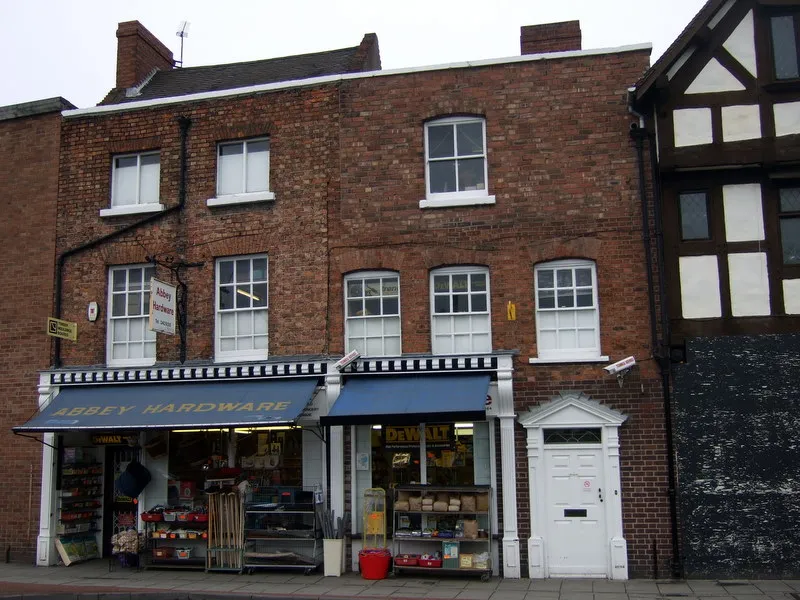
Photo: ceridwen, CC BY-SA 2.0, via Wikimedia Commons
On a Tuesday morning in September, I asked Colin, who runs the independent hardware shop at the end of my road, whether I could borrow a shelf. Not the window. Not a wall. One shelf, roughly the width of a tea tray, between the boxes of wood screws and the seed trays that never quite get put away until spring. He looked at me as if I'd asked to park a horse outside. Then he said, 'As long as you don't block the keys.'
That was the whole residency agreement. Six weeks, one shelf, no rent, a small commission on anything sold, and a strict instruction not to interfere with the spare-key rack. By late October 2026, I had shown three rotations of work, sold nineteen pieces, and had more useful conversations about pricing and audience than I've had in some proper galleries.
The shelf, the stock, and the strange company
A hardware shop is not a quiet place. It has its own weather: the rattle of a key-cutting machine, the smell of dust and paraffin, the clatter of a seed-tray display being shifted two inches to the left. My shelf sat in the middle of all that, next to things people actually needed. Hinges. Rawlplugs. Packs of assorted washers. A box of brass numbers for front doors.
The first week, I put out six framed drawings and a stack of prints. I priced almost everything under £20: £6 cards, £14 A4 prints, £18 for a small framed drawing. I kept two larger pieces at £45, mostly to see what would happen. What happened was that people picked them up, turned them over, looked at the price, and put them back as if the frame had become hot.
Colin was clear about the rules. No nails, no tape on the paintwork, no rearranging his stock to make my work look better. Fair enough. I used small clips and a single wooden shelf riser. Every Saturday morning I dusted the shelf, rotated a few pieces, and wiped the glass. The shop does not smell of art. It smells of keys and compost. That turned out to be the point.
Who actually stops
I kept a tally in a small notebook. Not a scientific survey, just a mark for every person who paused for more than a few seconds. Builders came in early, around 7.45, and often stopped while waiting for a key to be cut. Older men in fleeces stopped more than anyone. Parents on the school run stopped if a child pointed. Dog walkers stopped outside and looked through the window, which I'm counting as a stop because I'm not made of stone.
The surprise was how many people spoke to Colin and his staff rather than to me. 'Who did these, then?' 'Is that the towpath bridge?' 'How much is the little one?' The shop became a kind of accidental front desk. Colin, who has never claimed to be an art dealer, learned to say, 'Local artist, Gwen, she's in on Saturdays, prints are at the back of the shelf.' I could not have paid for that kind of recommendation.
What people stopped for was immediate. A drawing of the market square. The allotment gates. The bridge where the towpath floods every winter. Small, recognisable, cheap enough to add to a bag of screws without a speech. What they ignored was anything that required an explanation. My larger abstract ink pieces might as well have been invisible. One man looked straight at a £45 drawing, then asked Colin if he had any longer screws.
The £20 ceiling
I had assumed the £20 ceiling would feel limiting. In practice, it was clarifying. A hardware shop is not a gallery. People come in with a task and a tenner. If they leave with a print as well, it is a small, spontaneous decision, not a planned purchase. That means the work has to be easy to buy, easy to carry, and easy to explain to a partner later.
Cards did well. Small prints did better. The £18 framed pieces sold steadily, mostly to people buying presents for someone who had just moved into a flat nearby. The £45 pieces did not sell at all. I don't think that was a failure of the work. It was a failure of context. Beside spare keys and seed trays, a larger framed drawing starts to look like an awkward piece of furniture.
By the end of week four, I had stopped pretending the shelf was a mini exhibition. It was a display of things for sale, in a shop, for people who had not come to see art. That sounds obvious. It took me six weeks and a lot of quiet Tuesdays to believe it.
What got ignored, and why that is useful
There is a particular silence around work that nobody picks up. At first I took it personally. Then I watched the shop. People walked past the shelf carrying a toilet cistern valve and a bag of bird seed. They were not rejecting my drawings. They were on a mission.
The ignored pieces taught me more than the sold ones. Anything too big, too expensive, or too dependent on a written label sank into the background. Anything with a clear subject and a small price had a chance. I also learned that a price sticker should be visible without glasses. Colin's customers are practical people. If they have to ask how much something is, they often decide not to bother.
I kept a small notebook on the shelf for a few weeks, with a pencil on a string. That was a mistake. The string got tangled, the pencil walked, and one child drew a very good dinosaur over my note about commissions. Next time I'd use a simple card: 'Drawings and prints for sale. Ask at the counter.' Less charming, more useful.
The diplomacy bit
Showing work in someone else's shop is mostly an exercise in being a good guest. Colin wasn't worried about theft. He was worried about dust, about someone knocking over a hinge pack while reaching for a print, and about being asked questions he couldn't answer. So I kept the shelf tidy, labelled everything clearly, and made sure the stock behind it stayed accessible.
The shop took a small commission on sales, which felt fair. I didn't expect Colin to become my salesperson, but I did make it easy for him. I left a price list under the counter, a pile of paper bags, and a simple answer to the most common question: 'Is it the bridge?' Yes. Or the market. Or the allotments. People like knowing what they're looking at.
On Saturdays I minded the shelf for a couple of hours and talked to whoever stopped. That was the best part. A woman bought a print for her dad because it showed the road he grew up on. A builder told me he'd stopped every morning for a week and finally bought the small one of the church. Nobody said 'I'm here for the art.' They said they were getting a key cut. The art was a detour.
What I'd take to the next shelf
I'd do it again. Not because it was lucrative, though the sales paid for the printing and then some. I'd do it because accidental audiences are honest. They don't flatter you. They don't read the artist statement. They buy the thing that looks like somewhere they know, at a price that doesn't need a conversation.
Next time, I'd keep more work under £20, make the signs simpler, and rotate every week instead of every fortnight. I'd also stop worrying about the pieces nobody touched. A hardware shop shelf is not a verdict on your practice. It is a shelf. It holds what it can, for as long as it can, between the screws and the spare keys.
Six weeks was enough. The shelf is back to hinge packs and seed trays now. But I still pop in for a key, and Colin still says, 'The little bridge one went, by the way.' That's a better review than most.