The Bus Stop as Studio: Four Weeks of Drawing Route 42
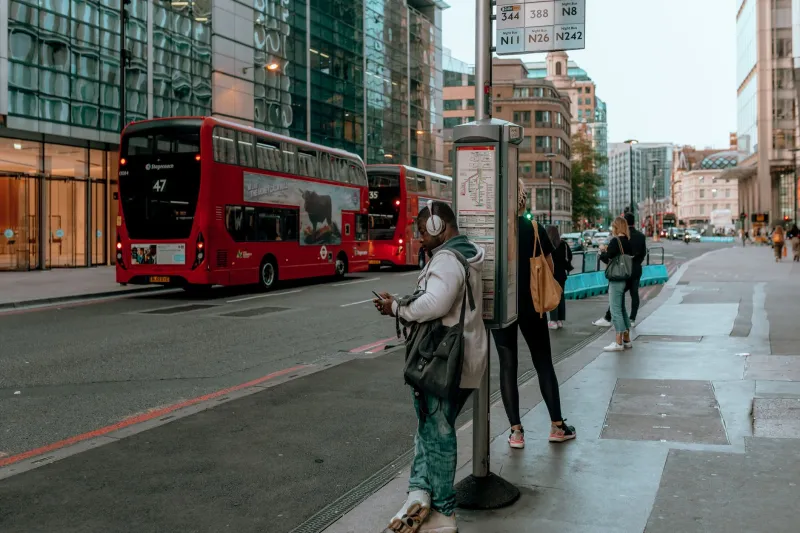
For a month, my sketchbook and I had a standing appointment with a bus shelter. Not a grand appointment. No tickets, no exhibition deadline, no reason anyone would ask for the drawings. Just the number 42, a bench that held rainwater in one corner, and the small, daily theatre of people waiting for something to arrive.
I started because I was stuck. I had been waiting for a better view, a bigger project, a place that felt worth drawing. Then I realised I was doing the classic thing: treating my own street like a rehearsal space and somewhere else like the real stage. So I picked the nearest bus stop and gave myself a simple rule. Thirty visits. Same stop. Different times. Draw what is there.
The stop before the bus
The first few visits were terrible in a useful way. I arrived expecting drama and got a man eating a Scotch egg, a woman checking her phone, and a bus that came eight minutes late. My drawings looked like the visual equivalent of a shrug. But by the fourth visit I started to see the place as a set with changing lights. At 7:40am the shelter was a queue of coats and headphones. At 3:15pm it was teenagers and crisp packets. At 6pm it was tired shoulders and the blue glow of screens.
The number 42 itself became a character. Not the bus, exactly, but the idea of it. The timetable says one thing; the road says another. The electronic sign says 4 mins, then 7 mins, then 2 mins, then blanks itself as if embarrassed. People lean out to look down the road, even though looking does not make the bus appear. I drew that lean again and again. It is a very honest shape.
Overheard fragments and other free material
I did not set out to eavesdrop. But a bus stop is a place where people say things they would not say in a sitting room, because they are half-in and half-out of their own day. I wrote down fragments in the margin, not to use as captions, just to remember the texture. A child asking whether pigeons have jobs. A man saying he would rather walk than get the 42, then getting the 42. Two women comparing the price of a loaf in the Co-op and the corner shop. Someone singing two lines of a song and stopping precisely when the bus came.
The sketches got better when I stopped trying to make each one a finished piece. Some pages are just the shelter roof and the rain. Some are a study of a hand holding a travel mug. One is a full-page portrait of a woman in a mustard coat who stood with her eyes closed for eleven minutes and did not miss her bus. I do not know her name. I hope she is well. That is the bargain of drawing strangers: you notice them without claiming to know them.
Weather as a collaborator
Weather did more for the project than any art book could. In drizzle, the bus stop becomes a shared secret. Everyone stands closer than they would otherwise, and the air smells of wet coats and chips. In low sun, the shelter casts a long stripe across the pavement and the waiting people become silhouettes with shopping bags. On one bright cold morning, the whole scene looked like a stage set for a play about nothing much, which is my favourite kind of play.
There was also the morning after the clocks went back, when the light arrived earlier and the mood changed. People were not quite ready for darkness at half four. I drew a woman in a red scarf checking the time on her phone, then the timetable, then the sky, as if one of them might offer a different answer. It was the most ordinary thing in the world and I wanted to get it down before it vanished.
The rules that kept me going
Thirty visits sounds like a lot until you break it down. It is one visit a day for a month, or a few double visits when life got in the way. My rules were simple: turn up, draw for at least twenty minutes, write three lines about what I noticed, and do not delete anything. The no-deleting rule was the important one. It stopped me curating the month into a highlight reel. The bad pages are part of the record. The page where I drew the shelter at a strange angle and the page where I gave up and drew a pigeon are both evidence that I was there.
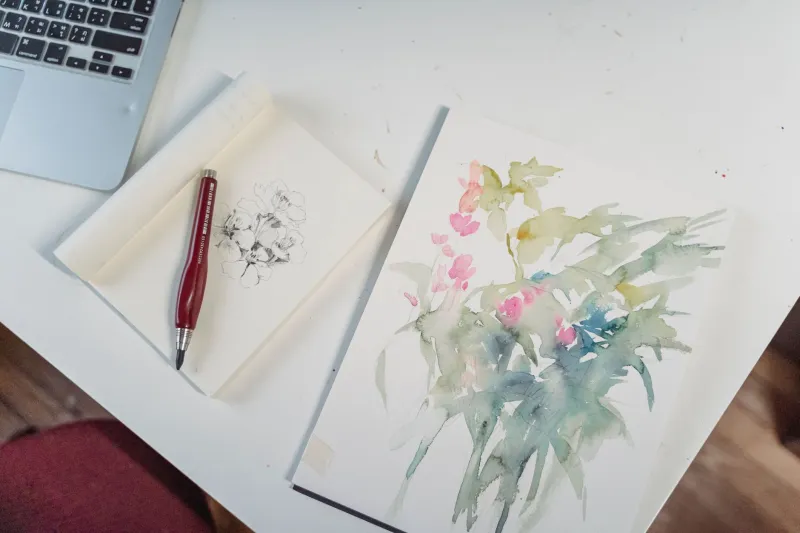
It also helped to have a small kit. A6 sketchbook, two pencils, a fineliner, a putty rubber, and a cheap waterbrush I barely used. No easel, no folding stool, no performance of being an artist. I sat on the bench when it was dry and stood under the shelter when it was not. A couple of people asked what I was doing. I said I was drawing the bus stop. Most nodded as if that made perfect sense, which in a way it did.
What the month actually taught me
The obvious lesson is that consistency works. But the less obvious one is that consistency is not really about discipline. It is about lowering the cost of starting. Once the bus stop was my subject, I did not have to decide what to draw. I just had to get there. That removed about eighty per cent of the friction that usually keeps me out of the sketchbook.
The second lesson is that ordinary places are not empty. They are full of small events that do not announce themselves as subjects. The bus stop gave me a month of weather, waiting, posture, clothing, overheard lines, pigeons, litter, kindness, impatience, and the particular way a stranger checks their phone when they are trying not to look hopeful. None of it was dramatic. All of it was material.
I finished the thirty visits on a grey Tuesday in November 2026. The last drawing is not very good. The bus came just as I started, and I drew the back of it disappearing up the road with a half-finished shelter in the foreground. It is not a neat ending. But it is honest, and it is mine.
Would I do it again? Yes, but not the same stop. I have my eye on the bench outside the library, or the queue at the Saturday market, or the window of the launderette. The project did not make me want to find a more interesting place. It made me realise I had been standing in one all along.